Anal Gland Chews for Dogs: What to Look For (and When to See a Vet)

Dogs that drag their rear across the carpet are not being funny. Usually they are uncomfortable, and the search that follows — "anal gland chews" — lands on a lot of products that promise far too much.
Here is a practical way to sort them.
What is actually happening
Two small glands either side of the anus normally empty when a dog passes stool. If stool is soft, or the dog is scooting and licking, the glands can become uncomfortable and fuller than they should be.
Firm, well-formed stool is the mechanical part of the puzzle. Fibre is what helps build that. This is why the useful ingredients in this category are less exotic than the marketing suggests.
Four things worth looking for
- Dietary fibre — pumpkin, psyllium or beet pulp. The most direct lever you have.
- Probiotics — stool quality starts in the gut, not at the gland.
- Named botanicals with amounts — not a "blend" you cannot compare.
- A weight-based serving table — small dogs and giant breeds are not dosed the same.
Three claims that should stop you
- "Expresses glands" — a chew does not do this. Manual expression is a physical procedure.
- "Prevents impaction" — that is a medical claim, and a serious one.
- "Cures the smell" — the smell is a symptom, not the problem.
What we make, and why
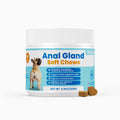
Our gland support chew is built around fibre plus a probiotic, because those are the two levers with a plausible mechanism. It is a daily support product, not a procedure.
- Gland Support Soft Chews — fibre and probiotic, daily
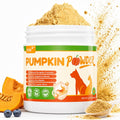
- Pumpkin Fibre Powder — the simplest way to add fibre to a bowl
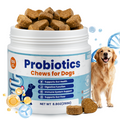
- Probiotic Soft Chews — stool quality, day to day
See the full digestive range →
When this is a vet visit, not a chew
See a vet promptly if you notice any of the following:
- A swollen, hot or painful area beside the anus
- Blood, pus, or an open tract on the skin near the gland
- Repeated scooting that does not improve within a week
- A dog that cannot pass stool comfortably
These are not supplement problems. They need hands and, sometimes, antibiotics or drainage.
General information for pet parents — not veterinary advice, and not a diagnosis or treatment for any condition.