Dog Allergy Chews: What to Look For Before You Buy

Written for pet parents who are already shopping — not for a diagnosis.
If your dog is licking its paws, rubbing its face on the rug, or going through a seasonal shed that never quite ends, you have probably searched for "dog allergy chews" and found fifty products that all sound identical.
This page is the shortcut. Five things to check on any label, three things that should make you walk away, and how our own formulas are built.
1. Start with the ingredient that does the work
Most chews in this category lean on one or two actives. The rest is carrier, flavour and binder. Look for a named, dosed active near the top of the panel:
- Quercetin — a plant flavonoid, commonly paired with bromelain
- Colostrum — supports the skin barrier
- Omega-3 (EPA/DHA) — from fish oil, not "omega blend"
- Probiotics — gut and skin are linked more than most people realise
If the panel says "proprietary blend" with no milligram amounts, you cannot compare it to anything. That is not an accident.
2. Check the serving size against your dog's weight
A chew that is dosed for a 60 lb dog and fed to a 12 lb dog is not "gentle" — it is inaccurate. Look for a weight table on the label, and check that the chew is scored or breakable if your dog is small.
3. Look at what is not on the label
Three phrases that should end the shopping session:
- "Cures" or "treats" allergies — a supplement cannot do this, and a company that writes it knows it
- "No side effects" — nothing edible can promise that
- Before / after photos of a dog's coat — that is a result claim dressed as a picture
We deliberately do not use any of these. Our position is simple: just the science, no hyperbole, no unsupported health claims.
4. Match the format to your dog, not to the trend
Chews are convenient, but they are not the only format. Three options, honestly compared:
| Format | Best for | Watch out for |
|---|---|---|
| Soft chews | Dogs that take tablets easily; daily routine | Picky eaters; check the flavour carrier |
| Liquid drops | Small dogs and cats; precise dosing | Needs measuring; some dogs dislike the taste |
| Powder | Mixing into wet food; multi-dog homes | Uneven if the bowl is not finished |
If your dog refuses chews, a dropper is not a downgrade — it is the correct format.
5. Give it a fair window
Skin turnover takes weeks, not days. A daily supplement deserves 3–4 weeks before you judge it, and a photo on day one makes that judgement honest. If nothing changes in four weeks, stop — do not double the dose.
What we make
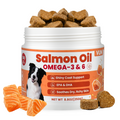
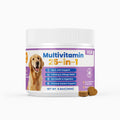
Our skin and coat range is built around the first three items on that list — quercetin and colostrum in the chews, omega-3 in the oil, and a probiotic for the gut-skin link. Every product page lists the full panel and the weight-based serving table.
- Skin Comfort Soft Chews — quercetin + colostrum, daily chew
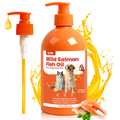
- Wild Salmon Omega-3 Oil — EPA/DHA for coat condition
- Probiotic Soft Chews — the gut side of the same problem
See the full skin & coat range →
One more thing
If your dog has open sores, a sudden hair loss patch, or is scratching hard enough to bleed, that is a vet visit — not a chew. Supplements sit alongside a diagnosis, never in place of one.
This article is general information for pet parents. It is not veterinary advice and does not diagnose or treat any condition.