EMOTIONAL & BEHAVIORAL WELLNESS

Dog Anxiety & Stress

Understand your dog’s stress signals, identify common triggers, and build a calmer daily routine with practical, supportive guidance.

Educational guidance only — not a veterinary diagnosis or behavior treatment plan.

Quick Answer

How can I help an anxious or stressed dog?

Start by noticing when the behavior happens and what changes around it. A predictable routine, daily exercise and enrichment, a calm place to settle, gradual behavior support, and appropriate nutritional calming support can all play a role. Sudden behavior changes or signs of pain, illness, weakness, or disorientation should be checked by a veterinarian first.

DOG ANXIETY & STRESS CHECKER

Find the closest everyday pattern

Choose what best matches your dog. This tool organizes common stress patterns and supportive next steps; it does not diagnose an anxiety disorder.

How old is your dog?

RECOGNIZE THE PATTERN

Common signs of stress and anxiety in dogs

Stress can show up through behavior, body language, or changes in routine. No single sign proves anxiety, so context matters.

01

Behavioral signals

Nervousness, whining, clinginess, avoidance, or difficulty relaxing can become more noticeable around stressful situations.

02

Physical stress signals

Panting when not hot, lip licking, yawning, ears held back, or a tense posture may appear when a dog feels uncertain.

03

Routine-related changes

Some dogs become more unsettled around departures, bedtime, travel, visitors, or changes in the household schedule.

ANXIETY, STRESS OR EXCITEMENT?

Similar behaviors can mean different things

Look at the trigger, how quickly your dog recovers, and whether the pattern appears across many situations.

EXCITEMENT

Positive stimulation

Energy rises around something rewarding and usually settles after the event passes.

SITUATIONAL STRESS

Linked to a clear trigger

The response appears around a particular environment, event, or change and improves when the trigger is gone.

ONGOING DIFFICULTY RELAXING

Shows up across the routine

When a dog has trouble settling in several everyday contexts, a consistent calming routine may be worth considering.

COMMON TRIGGERS

What can make dogs feel stressed or anxious?

Being left aloneChanges in routineUnfamiliar placesTravelStorms or fireworksGrooming or vet visitsToo little rest or enrichmentAge-related changes

Separation-related distress can be more complex than ordinary routine-change stress. Read our Separation Anxiety vs. Stress guide →

CALMER DAYS START WITH ROUTINE

How to help your dog feel calmer day to day

01

Build predictability

Keep meals, walks, rest, and departures as consistent as practical.

02

Add useful enrichment

Use sniffing, play, puzzles, and age-appropriate activity to support a balanced routine.

03

Create a calm settling space

Give your dog a familiar, low-stimulation area where rest is easy and interruptions are limited.

04

Consider daily calming support

Nutritional calming support can be one part of a consistent routine for dogs that are otherwise well.

DAILY CALMING SUPPORT

Why consistency can matter more than reacting after stress starts

For dogs that regularly become nervous, struggle to settle at night, or feel unsettled around routine changes, calming support can fit more naturally into a consistent wellness routine than an occasional afterthought.

Everyday nervousnessRelaxation supportNighttime settlingRoutine-change stress
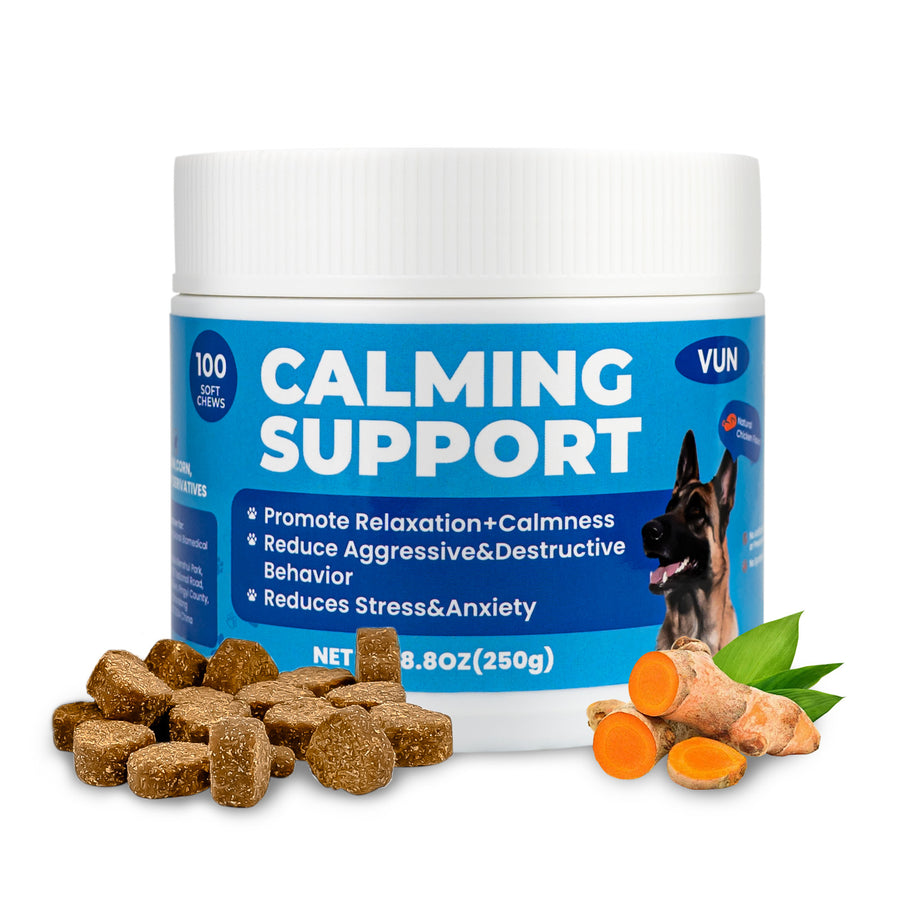
VUN Calming Soft Chews for Dogs | VUN Pet

FOR CONSISTENT DAILY CALMING SUPPORT

VUN Calming Soft Chews for Dogs

Made to support calm behavior, relaxation, and a more settled daily routine without positioning a supplement as a treatment for a behavioral disorder.

  • Everyday stress support
  • Calm & relaxation support
  • Nighttime settling support
  • Routine-change support

Use as directed on the product label. Calming supplements are not intended to diagnose, treat, cure, or replace veterinary or professional behavior care.

FORMULA FOCUS

Four ingredients we highlight for the daily calming routine

The Authority page keeps ingredient education focused. Full formula details remain available on the product page.

01

L-Theanine

An amino acid commonly used in calming formulas to support a relaxed, attentive state.

02

L-Tryptophan

An amino acid included as part of nutritional support for normal emotional wellness.

03

Chamomile

A botanical traditionally used in gentle relaxation-support routines.

04

Melatonin

Included to support nighttime relaxation and a consistent settling routine rather than as a sleeping medication.

Full formula also includesValerian RootMagnesiumGinkgo BilobaView full product details →

A PRACTICAL DAILY RHYTHM

Build a calmer daily routine

MORNING

Start predictably

Keep waking, feeding, and the first walk reasonably consistent.

DAYTIME

Balance activity and rest

Combine movement, sniffing, enrichment, and uninterrupted downtime.

EVENING

Lower stimulation gradually

Use calmer activities and a consistent wind-down routine before bedtime.

DAILY SUPPORT

Use consistently as directed

If calming chews fit your dog, follow the label rather than changing use from one stressful moment to the next.

NIGHTTIME SETTLING

Why won’t my dog settle at night?

Evening restlessness can follow an inconsistent schedule, late stimulation, environmental changes, stress, or age-related changes. The useful question is whether the pattern is familiar and routine-related or whether it appeared suddenly.

Try first
  • Keep bedtime predictable
  • Reduce stimulating activity late in the evening
  • Make the resting area quiet and familiar
  • Discuss sudden or unusual nighttime behavior with your veterinarian

TIME ALONE & CHANGE

Helping dogs adjust to separation and routine changes

Moving, travel, boarding, a new work schedule, or more time alone can make some dogs feel less secure. Predictable cues, gradual adjustment, enrichment, and calm departures can help ordinary transition stress.

Keep the boundary clear

Persistent or intense separation-related distress may need a structured behavior plan. Calming chews can be supportive, but they are not a treatment for a diagnosed anxiety disorder.

Read Separation Anxiety or Just Stress? →

AGE CHANGES THE CONTEXT

Emotional wellness through different life stages

PUPPY

New experiences & routine learning

Early life is full of unfamiliar people, places, sounds, and expectations. Gentle exposure and predictable routines matter.

ADULT

Daily lifestyle & environment

Work schedules, time alone, travel, visitors, and household changes can shape adult stress patterns.

SENIOR

Routine sensitivity & new changes

Older dogs may become more sensitive to changes. Sudden nighttime or behavioral changes deserve closer veterinary attention.

WHEN TO LOOK CLOSER

Some behavior changes deserve more than calming support

A supplement should not be used to cover up a new physical or neurologic problem.

Sudden major behavior changeSigns of pain or illnessDisorientationWeakness or unusual physical changesNeurologic signsProgressive worsening

When these changes are present, identifying the underlying cause should come before relying on a calming supplement.

VUN KNOWLEDGE STANDARD

Built around clear product boundaries

VUN Pet wellness content separates everyday nutritional support from conditions that need veterinary or professional behavior care. Formula transparency, source quality, safety context, and appropriate-use boundaries are reviewed as separate parts of the page.

Read the VUN Knowledge Standard →

PET PARENT QUESTIONS

Dog anxiety & calming support FAQs

What are common signs of anxiety in dogs?

Dogs may become nervous, more vocal, stress-pant, avoid situations, cling to family members, or have difficulty settling. The same behaviors can also have other causes, so look at context and changes from your dog’s normal pattern.

How can I tell if my dog is stressed?

Look for patterns around a trigger: changes in posture, panting when not hot, lip licking, yawning, vocalizing, avoidance, or difficulty relaxing. Recovery after the trigger ends is also useful information.

How can I help my dog relax?

Predictable routines, appropriate exercise and enrichment, a calm resting area, gradual behavior support, and consistent nutritional calming support can all be part of an everyday plan.

Do calming chews help dogs relax?

Calming chews are nutritional supplements designed to support relaxation and calm behavior. They are best viewed as one part of a routine rather than a replacement for training, veterinary care, or treatment of a behavioral disorder.

Can dogs take calming chews every day?

Some dog-specific calming products are formulated for consistent use. Follow the product label and discuss use with your veterinarian when your dog has health conditions, takes medication, is pregnant or breeding, or develops an unexpected reaction.

Why is my dog anxious when left alone?

Some dogs become unsettled when routine or access to family changes. Ordinary separation stress and more significant separation-related distress are not always the same, so persistent or intense patterns may need a structured behavior assessment.

Why won’t my dog settle at night?

Late stimulation, an inconsistent schedule, environmental changes, stress, and age can all affect nighttime settling. Sudden new nighttime behavior, especially in a senior dog, deserves veterinary attention.

When should a behavior change be checked by a veterinarian?

Arrange an evaluation when the change is sudden, worsening, or occurs with pain, illness, weakness, disorientation, neurologic signs, appetite changes, or other unusual physical symptoms.

VUN PET DAILY CALMING SUPPORT

Help your dog build a calmer daily routine.